


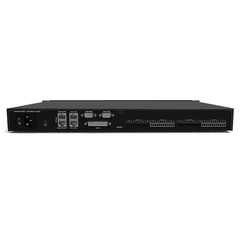



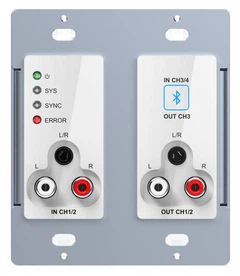

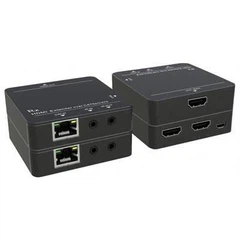



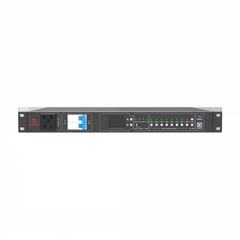
Common audio processors can be broadly divided into 4 architectures:
1. Simple speaker processor: There is a simple fixed processing module inside for connecting the mixer to the power amplifier to replace the analog peripherals for signal processing.
2. Multi-function digital audio processor: generally 8 in and 8 out, or larger; All input channels are equipped with phantom power for direct connection to conference gooseneck microphones. Its internal functions are relatively complete, and some of them have drag-and-drop programming processing modules, which users can build freely. This processor can generally replace an analog system consisting of small mixers and peripherals in a conferencing system. They usually have a network interface that can be connected to a computer via Ethernet for programming and online real-time control.
3. Digital audio processor with network audio transmission function: similar to the above two functions, but with the addition of network audio transmission function, audio data can be transmitted to each other in the local area network, which is convenient for multiple conference rooms that are interconnected. The audio network also supports control functions, and can also realize the flexible operation of centralized or decentralized control of the network.
4. Large-scale centralized processing of digital audio matrix: it is a host with extremely powerful processing power. The audio in each room is packaged into a network through the interface box and sent to the processing host in the main control room. After the host processing is complete, it passes through the network. Send to room replay. These audio networks are typically based on Gigabit Ethernet, CobraNet, or other protocols, and support real-time transmission and control. It is mainly used in places such as large broadcasting systems or conference centers. In contrast to the third item above, a small network audio processor is a distributed system, with a separate small host in each room, which can be used separately or jointly interoperated; This huge processing matrix is concentrated in a certain computer room, and all the processing and control of the computer room must be completed by the machines in the main engine room. Therefore, regardless of whether one or more rooms are used, the processors in the host room must be turned on at all times.


