


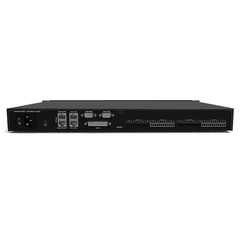
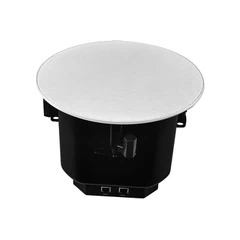
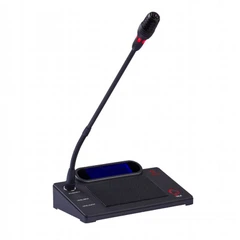


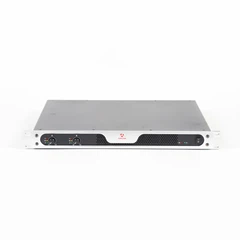



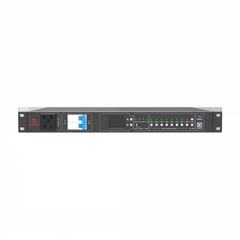
In the world of sound, whether it's the soul-stirring blockbuster in a cinema, the pure heavenly sound of professional recording, or the soft responses from smart speakers in our daily lives, there is always an invisible "master mixer" behind the scenes-the DSP (Digital Signal Processor) digital audio processor. It has evolved from a behind-the-scenes hero in professional audio to a core engine driving the entire intelligent audio industry. This article will provide an in-depth analysis of the current technological landscape of DSP processors and offer insights into their future development directions.

- Part One: Current State Analysis--The Integration of High Precision, High Efficiency, and High Integration
Today's DSP digital audio processor technology has long surpassed the realm of simple equalizers or effects units, forming a comprehensive ecosystem that integrates high-performance hardware, advanced algorithms, and intelligent software.
1. Hardware Platform: Performance Leap and Blurring Boundaries
Diverse Core Architectures: Traditional dedicated DSP chips still dominate the high-end professional market due to their deterministic low latency and high parallel processing capabilities. Simultaneously, the increasing power of general-purpose processors (CPUs), combined with optimized instruction sets, enables them to handle many mid-to-low-end audio algorithms. Furthermore, FPGAs (Field-Programmable Gate Arrays) offer the potential for ultra-low latency and extreme optimization for specific algorithms through programmable hardware logic. Multi-architecture hybrid solutions are becoming a trend in high-end products.
High-Resolution Audio Processing: Support for 32-bit float or even 64-bit float operations has become standard for high-end DSPs. Combined with sampling rates of 192kHz or higher, this provides unprecedented dynamic range and processing precision, minimizing distortion and noise during operations.
High Integration and Miniaturization: With the explosion of IoT and portable devices, DSP cores are increasingly integrated as IP cores into SoCs (System on Chips). A tiny chip might integrate a DSP, CPU, GPU, codec, and various interfaces simultaneously, significantly reducing power consumption and size while meeting performance requirements.
2. Algorithm & Software: From "Repair" to "Creation"
Extreme Optimization of Classic Algorithms: Fundamental algorithms like FIR/IIR filters, dynamic range control (compression, limiting, expansion), crossover, and delay are already highly mature. The current focus is on achieving higher performance with lower computational complexity.
Spatial Audio & Immersive Experience: Object-Based audio formats (like Dolby Atmos, DTS:X) have become mainstream. DSPs need to process metadata for sound objects in real-time and accurately reconstruct 3D sound fields for different speaker configurations (from cinemas to soundbars to headphones) using algorithms such as Higher Order Ambisonics (HOA) and Wave Field Synthesis (WFS). This represents a cutting-edge application of current technology.
Deep Integration of AI Algorithms: This is the most significant current technological wave. Machine Learning (ML) and Deep Learning (DL) models are being embedded into DSP workflows, achieving effects difficult to attain with traditional methods:
Intelligent Noise Reduction (ANC & SNR): Adaptive noise cancellation algorithms can dynamically identify and separate noise from speech, providing clear call quality in TWS earbuds and video conferencing.
Speech Separation and Enhancement: Precisely extracting specific voices from mixed environmental sounds greatly improves the wake-up rate and recognition rate of voice assistants.
Automatic Room Correction: By capturing test signals via a microphone, the DSP can automatically calculate and compensate for room acoustic defects, providing an average user with a "sweet spot" listening experience.
Intelligent Sound Effects: AI can analyze audio content (like music genre, game scene) in real-time and automatically match the optimal sound effect processing scheme.
3. Development Environment: Hardware-Software Decoupling and Ecosystem Building
Modern DSP development is no longer just about low-level coding. Major manufacturers provide mature Integrated Development Environments (IDEs), graphical programming tools (like SigmaStudio), and rich algorithm libraries. This allows audio engineers to quickly build and debug complex audio processing flows through drag-and-drop components without needing deep knowledge of chip architecture, significantly lowering the development barrier and accelerating time-to-market.

Part Two: Future Outlook--A New Paradigm of Perception, Cooperation, and Unobtrusive Intelligence
The march of technology never stops. The future of DSP processors will move towards greater intelligence, deeper integration, and more invisibility.
- Deep Symbiosis of AI and DSP
Future DSPs will not just be "hardware executing AI algorithms" but will inherently be "architectures born for audio AI." NPUs (Neural Processing Units) will be tightly coupled with DSP cores, forming heterogeneous computing architectures specifically designed for efficiently processing audio neural network models. This will enable more complex, real-time functions like voice cloning, scene semantic recognition (e.g., identifying specific events like glass breaking or a baby crying), and even emotional computation, allowing devices not only to "hear clearly" but also to "understand."
- Perceptual Intelligence
Moving beyond traditional signal processing towards perceptual audio coding and processing based on models of human auditory psychology and brain science. DSPs will be able to understand how humans perceive sound, thus prioritizing the processing of acoustically sensitive information and ignoring insensitive parts. This could achieve "perceptually lossless" audio at very low bitrates or focus computational resources on the most critical sound elements, intelligently maximizing sound quality.
- Distributed and Cooperative Processing
With the maturation of 5G/6G and edge computing, audio processing tasks will no longer be confined to a single device. Future DSP workflows may be distributed: endpoint devices (like earbuds) perform initial capture and noise reduction; phones or gateways handle mid-level processing; and the cloud completes the most complex semantic analysis and deep learning model inference. Devices will collaborate through low-latency communication to provide a seamless and consistent user experience.
- Personalization and Unobtrusiveness
Through continuous learning of user habits, hearing profiles, and even physiological states (e.g., via wearables), DSPs will provide highly personalized audio rendering. Examples include automatically compensating for specific frequency bands for users with hearing impairments or playing soothing music when fatigue is detected. Ultimately, the ultimate audio experience will become "unobtrusive"-users won't need any settings, as the system will always provide the best sound for the current scenario and state. The technology will serve people completely while receding into the background.
- Exploration of New Application Fields
AR/VR/MR (the Metaverse) presents the ultimate demands for audio immersion and interactivity. DSPs will need to achieve real-time binaural rendering synchronized with head tracking and visual rendering. Furthermore, in automotive acoustics, DSPs will be used to create independent acoustic zones (each passenger having their own audio space), active road noise cancellation, and in-car voice interaction. The intelligent cockpit will become the next crucial "acoustic battleground."
Conclusion
From enhancing sound quality to creating experiences, from processing signals to understanding semantics, the evolution of the DSP digital audio processor is a microcosm of the intelligent upgrade of the audio industry. Its technological core is shifting from pure computing power competition to a fusion competition of "computing power + algorithms + perception." In the future, this "audio brain" will become more powerful, ubiquitous, yet subtle, ultimately reshaping how we perceive the world and connect with each other.


