





The Future of Command & Control: How Audio-Visual Integration Powers the Modern INTEGRATED OPERATION CENTRE
In the era of smart cities, digital transformation, and real-time data proliferation, the hub of any critical environment-be it a corporate headquarters, a university campus, or a municipal command center-is the INTEGRATED OPERATION CENTRE (IOC). Gone are the days when an IOC was simply a room full of monitors. Today, it is a strategic enabler that requires the seamless convergence of audio-visual technology, data visualization, and collaborative software.
For industries ranging from public safety to corporate management, the shift toward integrated operations is driven by the need to break down information silos. As highlighted by recent implementations, an effective IOC consolidates data from security, facilities, transport, and sustainability onto a single digital platform to provide "unprecedented oversight" . Here is how cutting-edge audio-visual and information solutions are redefining the INTEGRATED OPERATION CENTRE.

1. Beyond Monitoring: The Shift to Proactive Intelligence
Traditional control rooms often suffer from "fragmented legacy systems" and reactive maintenance practices. However, a modern INTEGRATED OPERATION CENTRE functions as the central nervous system of an organization. By leveraging distributed audio-visual systems, IOCs can now facilitate real-time video monitoring, alarm management, and the supervision of field operations from a single pane of glass.
For example, in high-stakes environments like public safety, next-generation IOCs are moving toward "virtual control rooms" that allow multiple agencies to share data and situational awareness seamlessly. This requires an audio-visual infrastructure that is no longer just about displaying data, but about enabling intelligent decision-making.

2. The Role of Distributed Audio-Visual and KVM in the IOC
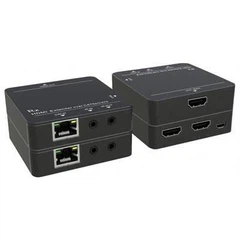
The technical backbone of a high-performance INTEGRATED OPERATION CENTRE relies on distributed, network-based architectures. Modern IOCs utilize IP-based solutions to overcome physical distance. Technologies such as "distributed KVM" (Keyboard, Video, Mouse) systems and video wall processors allow operators to manage hundreds of computers and data streams without the limitations of physical cables.
According to industry specifications, a robust IOC must support "8K point-to-point display" for ultra-high-definition mapping and "KVM seat collaboration" that enables "one person with multiple screens" and mouse-switching functions. This level of integration ensures that operators can react to incidents-from a fire alarm to a chiller plant fault-within seconds .

3. Breaking Data Silos with "Digital Twins"
A significant trend in the evolution of the INTEGRATED OPERATION CENTRE is the use of 3D digital twins. By layering live feeds from CCTV cameras and IoT sensors onto an interactive 3D model of the facility, operators gain a visual context that was previously impossible. This allows for virtual patrols and faster incident response.
Audio-visual integration is critical here; it transforms raw data into visual narratives. When combined with an "integrated dashboard" that consolidates alerts, the AV system ensures that operators are not just watching screens but are actively engaged with a dynamic representation of the physical world.
4. Real-World Impact: Resilience and Efficiency
The value of a well-designed INTEGRATED OPERATION CENTRE is measurable. Data from recent university-based IOCs show dramatic improvements in operational metrics. Facilities have reported a "45% improvement in fault response times for urgent cases" and a "50% reduction in emergency dispatch times" due to better triaging capabilities and centralized dashboards.
In aviation and large-scale transportation, IOCs are the "heartbeat" of the operation. They must ensure that even during cyber-events or fiber cuts, communication remains intact. This requires an "independent, isolated, always-available network" that supports cloud-based operations and drone video feeds, ensuring that command and mobility are never compromised .

5. The Road Ahead: AI and Automation
Looking forward, the INTEGRATED OPERATION CENTRE will become even more automated. By integrating AI-powered surveillance tools-including facial recognition, license plate recognition, and large vision model (LVM) analytics-IOCs will shift from descriptive analytics (what happened) to prescriptive analytics (what to do next).
For instance, by monitoring utility consumption and triggering alerts when thresholds are exceeded, the IOC can automatically initiate corrective workflows. This proactive approach not only enhances security but also drives sustainability and operational resilience.
Conclusion
For organizations looking to build or upgrade their command centers, focusing on the audio-visual and信息化(informatization) strategy is paramount. The modern INTEGRATED OPERATION CENTRE is a convergence point-where data becomes vision, and vision becomes action. By investing in distributed, high-bandwidth AV solutions and breaking down data silos, businesses and government entities can ensure their IOC is not just a cost center, but a driver of strategic advantage.
Keywords: INTEGRATED OPERATION CENTRE, Command and Control, Audio Visual Integration, Distributed KVM, Smart Campus, Video Wall, Real-time Monitoring, Situational Awareness.