







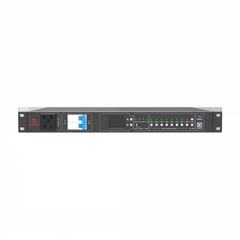
1. Audio signal processing
Equalization:
Audio signals of different frequencies can be adjusted, and specific frequency bands can be boosted or attenuated to improve the timbre of the audio. For example, adding low frequencies can enhance the rhythm and heaviness of the music; Boosting the high frequencies can make the sound clearer and brighter.
Ability to personalize equalization settings for different audio sources (e.g., vocals, instruments, background music, etc.) to highlight their characteristics or make up for deficiencies.
Filtering:
Low-pass filtering removes high-frequency noise, making the audio smoother and softer. In some situations, such as voice broadcasting, background noise and harsh high-frequency components can be reduced to improve the intelligibility of speech.
High-pass filtering is used to remove low-frequency noise and interference, such as wind noises and machine roars, to make the audio cleaner.
Bandpass filtering and bandstop filtering can select audio signals in a specific frequency range for processing or suppression, and play an important role in audio production and audio analysis.
Compression and clipping:
The compression function can automatically adjust the dynamic range of the audio signal, so that the loud part is compressed and the small part is improved, so that the audio signal is more stable. This is very important in broadcasting, music production, and other fields to avoid the fluctuation of audio signals and improve the listening experience of listeners.
The limiting function prevents the audio signal from being overloaded and distorted, protecting the speaker and other audio equipment from damage. When the amplitude of the audio signal exceeds the set threshold, the limiter automatically restricts it to a safe range.
2. Audio routing and distribution
Input and output routing:
A digital audio processor can receive input signals from multiple audio sources, such as microphones, musical instruments, audio players, etc., and route these signals to different output channels. For example, different instrument signals can be assigned to different speakers or audio tracks to mix and play multichannel audio.
The input and output channels can be flexibly configured to meet the needs of different audio systems. For example, multiple microphone signals can be mixed and output to a speaker system, or an audio source can be distributed to several different zones for playback.
Signal Distribution and Matrix Switching:
An input signal can be distributed to multiple output channels to achieve the sharing and distribution of audio signals. For example, in a conference room, a single microphone signal can be sent to multiple speakers and recording devices at the same time.
Matrix switching allows you to quickly switch between multiple input and output channels, making it easy to switch between different audio sources and playback devices. This is useful for performances, conferences, and more, as you can quickly switch where the audio signal is coming from and where it's going.


