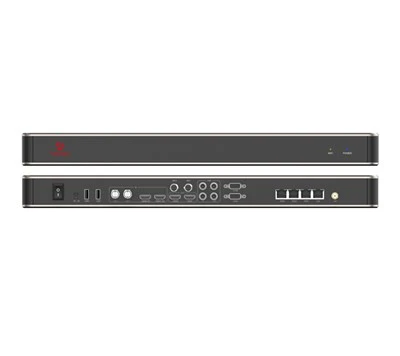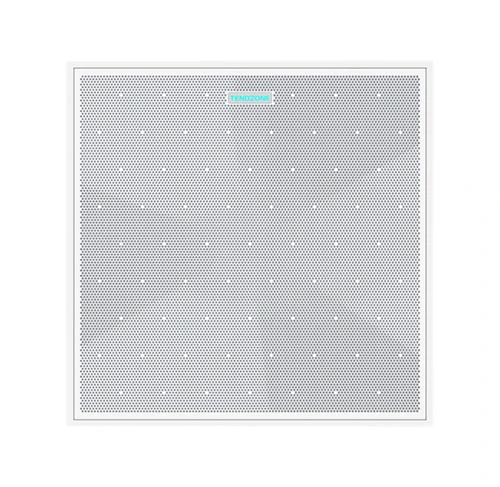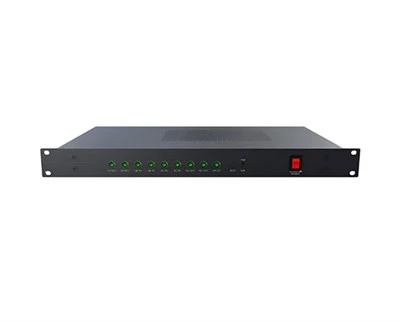






In high-stakes environments where seconds separate success from failure, the COMMAND CENTRE serves as the undisputed nerve center of operations. Whether it is a corporate security operations center, an emergency response facility, a transportation control hub, or a military command post, the COMMAND CENTRE is where critical decisions are made, resources are coordinated, and situational awareness is maintained around the clock.
For decades, the traditional COMMAND CENTRE was defined by walls of monitors, banks of radios, and operators working in relative isolation. But the demands of modern operations-driven by data proliferation, distributed teams, and the need for instantaneous response-have fundamentally transformed what a COMMAND CENTRE must be. Today, the most effective command centers are no longer simply rooms full of screens; they are intelligent, integrated environments where audio-visual technology, data visualization, and human expertise converge to enable proactive decision-making.

The Evolution of the COMMAND CENTRE
The COMMAND CENTRE has undergone a dramatic evolution over the past decade. What began as a facility primarily focused on voice communications and basic video monitoring has evolved into a sophisticated hub that integrates:
Real-time data streams from IoT sensors, surveillance cameras, and operational systems
Advanced analytics powered by artificial intelligence and machine learning
Collaborative workflows that connect on-site operators with field teams and remote experts
Immersive visualization that transforms raw data into actionable intelligence
This evolution reflects a broader shift from reactive operations-responding to incidents after they occur-to proactive, predictive management. A modern COMMAND CENTRE anticipates issues before they escalate, enabling operators to deploy resources preemptively and mitigate risks in real time.

The AV Foundation: Building the Visual and Collaborative Backbone
At the heart of every high-performing COMMAND CENTRE lies a robust audio-visual infrastructure. While software platforms provide the intelligence, the AV system provides the interface through which operators interact with that intelligence. In a mission-critical environment, the quality of that interface directly impacts decision speed, accuracy, and overall operational effectiveness.
1. Video Walls: From Display to Decision Canvas
The centerpiece of any COMMAND CENTRE is the video wall-a large-scale, high-resolution display system that serves as the primary visualization canvas for the entire operation. Modern video wall solutions have moved far beyond simple display arrays. Today's systems feature:
Distributed processing architectures that allow operators to place any source anywhere on the wall, at any size, without resolution degradation
Seamless scalability to accommodate expanding data sources and display requirements
Flexible layout management with preset configurations for different operational modes-daily monitoring, incident response, strategic planning
4K and 8K support for ultra-high-definition mapping, surveillance footage, and detailed data visualization
For mission-critical COMMAND CENTRE environments, redundancy is non-negotiable. Distributed architectures ensure that if any component fails, the system continues to operate without interruption, maintaining situational awareness when it matters most.
2. Collaborative Workstations: Empowering the Operator
While the video wall provides the big picture, individual operator workstations are where decisions are executed. In a modern COMMAND CENTRE, each operator requires simultaneous access to multiple data sources, applications, and control interfaces.
Distributed KVM (Keyboard, Video, Mouse) technology addresses this need by enabling:
Single-point control of multiple computers and servers from one keyboard and mouse
Seamless screen sharing between colleagues for collaborative problem-solving
Any-source, any-workstation access across the entire facility
Ergonomic, clutter-free workspaces with computers securely housed in centralized server rooms
This capability transforms the COMMAND CENTRE from a collection of isolated desks into a truly collaborative environment where information flows freely between operators, enabling faster, more coordinated responses.
3. Fusion Communication: Unifying Disparate Channels
A COMMAND CENTRE is only as effective as its ability to communicate with field teams, partner agencies, and external stakeholders. Traditional facilities often struggle with fragmented communication systems-radio for field operations, telephone for external coordination, intercom for internal communication, and video conferencing for remote collaboration.
Modern COMMAND CENTRE designs integrate these disparate channels through fusion communication platforms that unify voice, video, and data across all endpoints. Operators can initiate group calls that simultaneously connect radio users, smartphone users, and video conferencing participants. In emergency situations, this capability alone can reduce coordination time from minutes to seconds.

Intelligent Features: AI-Enhanced Operations
The convergence of audio-visual technology with artificial intelligence is driving the next generation of COMMAND CENTRE capabilities. Advanced AV systems now incorporate AI-driven features that enhance operator effectiveness:
Intelligent video analytics: Surveillance feeds are processed in real time to detect anomalies-crowd formation, unauthorized access, abandoned objects-and automatically push alerts to the video wall or operator workstations
Automatic camera correlation: When an operator selects a location on a GIS map, the system automatically pulls up the nearest surveillance camera feed, eliminating manual searching
Voice-activated control: Operators can command the AV system using natural language-switching video wall layouts, pulling up specific data sources, or initiating communication channels without taking hands off controls
AI-assisted alert triage: The system prioritizes alerts based on severity and context, ensuring operators focus on the most critical issues first

Designing for Mission-Critical Environments
A COMMAND CENTRE operates under conditions that demand uncompromising reliability. When designing these facilities, several principles are paramount:
Redundancy and Resilience
Mission-critical environments require architectures that ensure continuous operation even in the event of component failure. This includes:
N+1 or fully redundant processing nodes for video walls and KVM systems
Dual power paths and uninterruptible power supplies
Redundant network paths to eliminate single points of failure
Hot-swappable components that can be replaced without system shutdown
Ergonomic Design
Operators in a COMMAND CENTRE often work extended shifts under high cognitive load. Ergonomic design is not a luxury-it is a necessity. Key considerations include:
Adjustable workstation height to accommodate standing and sitting positions
Optimized sightlines to video walls to minimize neck strain
Ambient lighting that balances screen visibility with operator comfort
Acoustic treatment to manage noise levels and ensure clear communication
Cybersecurity
As COMMAND CENTRE systems become increasingly connected, cybersecurity becomes a critical concern. Modern AV architectures must support:
End-to-end encryption for all data and control traffic
Role-based access control to ensure operators only access authorized resources
Integration with enterprise security frameworks for unified threat management
Regular security audits and firmware updates to address emerging vulnerabilities

Real-World Applications Across Industries
The principles of modern COMMAND CENTRE design apply across a wide range of sectors:
Corporate Security: Protecting employees, assets, and facilities through integrated surveillance, access control, and incident management
Emergency Response: Coordinating police, fire, and medical services during natural disasters, accidents, or security incidents
Transportation Management: Monitoring and controlling road networks, rail systems, airports, and seaports to ensure safety and efficiency
Utility Operations: Managing power grids, water systems, and telecommunications networks with real-time visibility and control
Smart Cities: Integrating data from across urban systems-traffic, public safety, environmental monitoring, utilities-into a unified operational picture
The Future of the COMMAND CENTRE
As technology continues to evolve, the COMMAND CENTRE will become even more intelligent and autonomous. Several trends are shaping the next generation of command centers:
Digital twins: 3D virtual replicas of physical environments that enable operators to simulate scenarios, test responses, and visualize operations in immersive detail
Agentic AI: Networks of AI agents that monitor systems, identify anomalies, and initiate corrective actions without human intervention
Extended reality (XR): Augmented and virtual reality tools that provide field teams with remote expert support and enable immersive training for operators
Cloud-native architectures: Distributed, cloud-based systems that enable operators to work from anywhere while maintaining the same situational awareness as those in the physical command center

Conclusion: The Strategic Imperative
The COMMAND CENTRE has become the cornerstone of modern enterprise and government operations. Whether managing a corporate campus, a transportation network, or a smart city, organizations that invest in a purpose-built command center gain a strategic advantage in responsiveness, efficiency, and resilience.
But technology alone is not enough. A successful COMMAND CENTRE requires a holistic approach that integrates advanced audio-visual systems with intelligent software, ergonomic workspace design, and-most importantly-the operators who make critical decisions every day. When these elements come together, the COMMAND CENTRE transforms from a room full of screens into a true intelligence hub-where data becomes vision, and vision becomes action.
Keywords: COMMAND CENTRE, Command Center, Control Room, Audio-Visual Integration, Video Wall, Distributed KVM, Fusion Communication, Situational Awareness, Mission-Critical Operations, Emergency Response, Smart City Control