


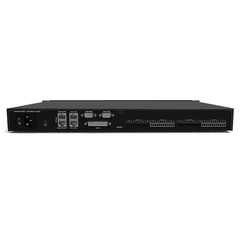
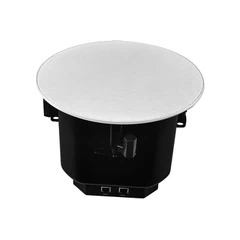
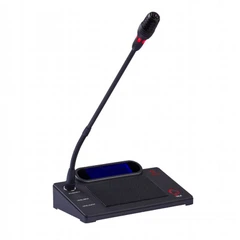


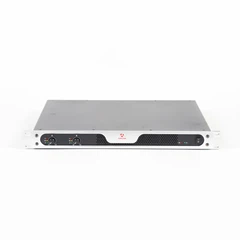



As blended learning solidifies its place as the new standard in education, traditional physical spaces are undergoing a profound digital transformation. From higher education institutions to K-12 schools, the demand is no longer for simple live-streaming tools. Instead, educators are seeking sophisticated solutions that deeply integrate both in-person and remote experiences into a unified HYBRID CLASSROOM.
As a professional provider of audio-visual information solutions-with deep experience in boardrooms, command centers, and smart classrooms-we understand that the core of a successful hybrid classroom lies in leveraging advanced AV technology to eliminate physical distance. The primary goal is to ensure that every student, whether physically present or joining remotely, enjoys an equitable, seamless, and engaging learning experience.

The Core Technical Challenges of the Modern Classroom
In the post-pandemic educational landscape, expectations for online learning have fundamentally shifted. The emergency measures of the past, such as relying on a laptop's built-in camera and microphone, are no longer sufficient to meet the demands of quality instruction and interaction. Today, building an effective HYBRID CLASSROOM involves overcoming three critical challenges:
Equity of Experience: How do we make remote students feel like they are truly part of the class, rather than just watching a broadcast? They need to be able to interact fluidly with the on-site instructor and peers, fostering a sense of true presence.
Simplicity of Operation: Instructors are educators, not audio technicians. Complex equipment and workflows disrupt the flow of teaching and often lead to technology being abandoned. The system must be intuitive and reliable.
Authentic Audio and Video Reproduction: Remote students need to clearly see whiteboard content, the instructor's subtle expressions, and the reactions of in-room students. Simultaneously, every question and comment from the room must be captured clearly and transmitted to the remote end without echo or distortion.

Core Components of a Professional-Grade HYBRID CLASSROOM
To address these challenges, we recommend a HYBRID CLASSROOM design architecture based on professional AV infrastructure. This approach prioritizes flexibility, scalability, and intelligence to create a space that adapts to pedagogy, not the other way around.
1. Video Capture: From "Seeing" to "Engaging"
Video is the primary window through which remote students perceive the class. Traditional fixed cameras with a single, static view cannot capture the dynamic nature of classroom interaction.
AI-Powered Tracking: Deploy PTZ (Pan-Tilt-Zoom) cameras equipped with AI-driven auto-tracking. These cameras can seamlessly follow the instructor as they move around the room and smoothly switch to a preset shot of the whiteboard, preventing remote students from experiencing motion sickness or losing context.
Multi-Camera Logic: For larger lecture halls or classrooms that utilize group discussions, a multi-camera setup is essential. Combining a panoramic view of the room with close-up shots of active speakers creates a rich, dynamic viewing experience that replicates the feeling of being there.

2. Audio Processing: The Lifeline of Hybrid Learning
Audio is the single most critical factor in determining the success or failure of hybrid teaching. If the sound is poor, all interaction ceases.
Beamforming Microphone Arrays: Move beyond handheld or lapel mics. Ceiling or tabletop microphone arrays utilize beamforming technology to precisely capture the voices of the instructor and students across the entire room. This frees the instructor to move naturally and ensures every comment from the audience is heard.
Acoustic Echo Cancellation (AEC) & Noise Reduction: A professional Digital Signal Processor (DSP) is non-negotiable. It must provide robust AEC to prevent the room's loudspeakers from creating echoes for remote participants, while simultaneously filtering out ambient noise like HVAC systems or hallway chatter to ensure pristine voice clarity.

3. Unified Control and Software Integration
The ultimate success of a HYBRID CLASSROOM hinges on the seamless fusion of hardware and software.
One-Touch Join: A centralized touch panel should allow the instructor to start the entire class with a single click. This single action can power on the displays, lower the screen, activate camera presets, and launch a Zoom or Microsoft Teams meeting, drastically reducing the cognitive load on the teacher.
BYOD (Bring Your Own Device) Flexibility: Instructors often prefer using their own laptops. The classroom system should support a simple, single USB-C connection that allows them to utilize the room's professional-grade camera, microphones, and speakers as a high-end peripheral for their personal device.

4. The Infrastructure Shift: From Analog to AV-over-IP
To reduce cabling complexity and increase system flexibility, modern hybrid classrooms are rapidly transitioning to an AV-over-IP architecture.
Networked AV: Utilizing protocols like NDI or Dante AV, audio and video signals are transmitted over standard Ethernet. This drastically simplifies installation, reduces costs, and, most importantly, enables centralized management and signal routing across multiple classrooms from a single location.
AI Enablement: An IP-based infrastructure lays the groundwork for future AI integration, such as analyzing student engagement or generating post-class analytics to provide valuable data for improving teaching methods.

Investment Value and Future Outlook
Building a high-performance HYBRID CLASSROOM is not just an equipment upgrade; it is a strategic investment in the quality and reach of your institution's educational offerings. By standardizing on a reliable AV solution, schools can achieve:
Reduced Operational Costs: IP-enabled devices allow for remote monitoring and troubleshooting, significantly cutting down on on-site technical support visits.
Improved Educational Outcomes: Superior audio and video quality, combined with seamless interaction, leads to higher retention rates and greater engagement among remote learners.
Enhanced Educational Equity: It allows top-tier educational resources to transcend geographical boundaries, ensuring that students who cannot be physically present-including those with specific accessibility needs-have an equal opportunity to learn.
As we continue to innovate in the AV industry, we firmly believe that technology should serve human connection. The future of learning is borderless, and our HYBRID CLASSROOM solutions are designed to help educational institutions confidently navigate this change, creating an environment that is truly interconnected, intelligent, and human-centric.
Ready to transform your teaching spaces? [Contact our AV specialists today] for a personalized hybrid classroom consultation and demonstration.


