


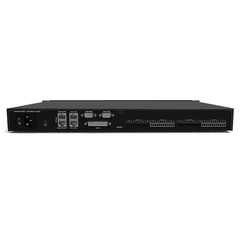


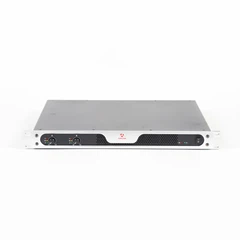



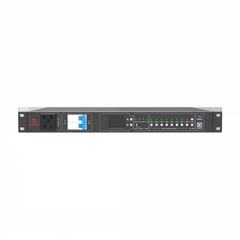
The parameters of the audio processor mainly include the following aspects:
Frequency response: Frequency response refers to the amplitude-frequency characteristics, usually based on the IF frequency, the logarithm of the ratio of the maximum and minimum values of the output amplitude to the IF in the rated frequency range, in dB.
Dynamic Range : Dynamic range is the logarithm of the ratio of the maximum undistorted level to the noise level, in dB. The difference between the dynamic range and the maximum output level dB indicates the noise level of the device.
Distortion: Distortion generally refers to the percentage of nonlinear distortion (harmonic distortion) of a waveform.
Common-mode rejection ratio: The common-mode rejection ratio is the logarithm of the ratio of the amplification of the differential mode signal at the balanced input to the amplification of the common-mode signal, in dB. A high common-mode rejection ratio indicates that the device has better immunity to interference.
Input and output channels : The number of input and output channels of the audio processor is an important parameter. For example, the DP48 digital audio processor has 4 input channels and 8 output channels, each configured with a 16-band parametric filter, gain control, noise gate, RMS limiter, divider, and delay.
Sampling frequency and quantization bits: Sampling frequency and quantization bits directly affect the performance of the audio processor. The DP48 digital audio processor has a sampling frequency of 48kHz and a quantization bit of 24 bits.
Core chip: The type and performance of the core chip has a significant impact on the overall functionality of the processor. The DP48 digital audio processor is powered by Analog Devices' SHARC ADSP-21489@400MHZ floating-point DSP processor.
Together, these parameters determine the performance and application scenarios of the audio processor, and users need to consider it comprehensively according to their specific needs when choosing.


