






Beyond Monitoring: How the INTELLIGENT OPERATION CENTRE is Redefining Proactive Decision-Making
In the era of smart cities, digital transformation, and real-time data proliferation, organizations face an unprecedented challenge: how to turn vast amounts of fragmented information into actionable intelligence. The answer lies in the INTELLIGENT OPERATION CENTRE (IOC)-a convergence point where data integration, artificial intelligence, and audio-visual visualization unite to create a central nervous system for modern enterprises.
According to industry research, global enterprise investment in intelligent operation platforms exceeded $180 billion in 2023, with a compound annual growth rate of 14.7% . This explosive growth reflects a fundamental shift: the INTELLIGENT OPERATION CENTRE is no longer just a monitoring facility but a strategic enabler that transforms raw data into predictive insights and coordinated action.
What Defines an INTELLIGENT OPERATION CENTRE?
An INTELLIGENT OPERATION CENTRE is a digital management platform that integrates data aggregation, real-time monitoring, intelligent analysis, and collaborative decision support. Unlike traditional control rooms that passively display information, today's IOCs actively process, analyze, and respond to dynamic operational environments.
The core value proposition is simple yet powerful: by breaking down information silos and applying AI-driven analytics, IOCs enable organizations to shift from reactive "fire-fighting" to proactive prevention. As one industry analysis notes, this transition from "passive response to active intervention" is the key differentiator of mature intelligent operation capabilities.

Real-World Impact: The Power of Integrated Intelligence
A compelling example of IOC capabilities in action came during the 15th National Games of China, held in Guangzhou in November 2025. The Guangzhou Main Operation Center (MOC) processed over 100 million data points across 216 categories-integrating transportation, weather, public health, and venue operations into a single interface .
What made this INTELLIGENT OPERATION CENTRE remarkable was its "trio-sync" design, linking data, maps, and surveillance video feeds. Commanders could click any area on a 3D map and instantly access live footage, crowd density metrics, and task progress. During a pre-opening drill, when the system flagged simulated crowd buildup at a venue entrance, staff located the site, activated nearby cameras, and dispatched security personnel-all within two minutes.
This speed was possible because the IOC integrated over 10 departmental systems, eliminating the need to switch between platforms. Rather than building from scratch, developers reused existing city digital infrastructure, ensuring that 85% of the hardware and software would be repurposed for urban management after the Games.

The Technical Foundation: Data Integration and Visualization
At its core, an INTELLIGENT OPERATION CENTRE rests on a unified data architecture. Organizations often face "data silos" across production systems, ERP, SCM, and IoT devices-each with different formats and access protocols. A robust IOC platform must support multi-source heterogeneous data ingestion, cleaning, transformation, and storage through API-driven interfaces.
In one national economic development zone project, establishing a unified data lake integrated real-time information from over 30 subsystems covering energy consumption, security, transportation, and environmental monitoring. The result? Data processing efficiency improved by 47%.
Visualization is equally critical. Modern IOCs leverage 3D digital twin technology to map physical spaces-factory layouts, equipment status, production flows-onto interactive digital interfaces. This enables "drill-down" viewing from facility overviews to specific devices, with response times measured in seconds. One automotive parts manufacturer reported a 28% reduction in unplanned downtime and 60% faster anomaly response after deploying such visualization capabilities.

AI-Powered Analytics: From Descriptive to Predictive
The true intelligence in an INTELLIGENT OPERATION CENTRE comes from machine learning and predictive analytics. By analyzing historical data alongside real-time sensor inputs, IOCs can forecast future conditions and trigger preemptive actions.
In urban traffic management, for example, systems can predict congestion probability 30 minutes in advance and automatically generate diversion recommendations. In industrial settings, time-series analysis of equipment data can predict critical component failures up to 72 hours ahead, enabling predictive maintenance. According to McKinsey research, AI-driven predictive maintenance can reduce equipment maintenance costs by 10-40% while extending asset lifespan.
The alert mechanisms themselves are increasingly sophisticated, operating across multiple levels: tier-one alerts for major failures triggering automatic shutdowns and work orders; tier-two alerts for trending anomalies with optimization recommendations; and tier-three alerts for potential risks requiring management attention. One energy group applying this approach reduced unplanned equipment downtime by 41% and annual maintenance costs by approximately US $23 million.


Cross-Departmental Coordination and Emergency Response
An INTELLIGENT OPERATION CENTRE is not merely a technology platform-it is an organizational hub for cross-functional collaboration. In emergency scenarios-whether a safety incident at an industrial park or a production line failure-the system must automatically trigger response protocols, push alerts to relevant personnel, and initiate coordinated workflows.
One chemical park IOC demonstrated this capability when detecting combustible gas concentrations exceeding safety thresholds. The system automatically coordinated with security systems to close valves, activate exhaust equipment, and notify fire, environmental protection, and emergency management teams-all within three minutes, compared to 15 minutes previously.
This level of integration requires clear role definitions, standardized procedures, and seamless communication tools. Modern IOCs incorporate event replay and simulation capabilities, allowing teams to practice responses and continuously refine their strategies through joint drills.
The Rise of Agentic AI in Operations
Looking toward the future, the INTELLIGENT OPERATION CENTRE is evolving toward greater autonomy. Industry experts predict that 2026 will see the mainstream adoption of "agentic AI"-networks of collaborating AI agents managing complex workflows across IT, HR, finance, supply chains, and customer engagement.
These AI agents will monitor low-latency connectivity in real time, rerouting traffic and fixing issues without human intervention. Self-healing networks ensure that critical connections never drop, even in dense urban environments. By the time a human operator would notice a lag, the network has already recalibrated itself to maintain safety protocols.
As Sandhya Arun, Chief Technology Officer at Wipro Limited, observes: "Enterprises are moving from isolated agentic AI experiments to pragmatic, enterprise-wide strategies focused on measurable business outcomes" .
Fusion Communication: The Audio-Visual Backbone
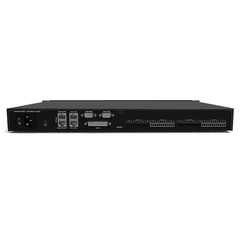
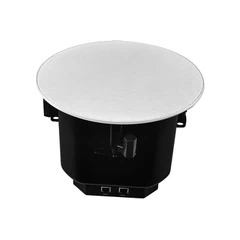
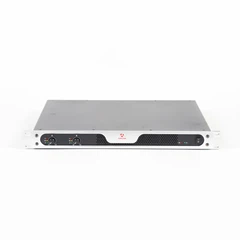
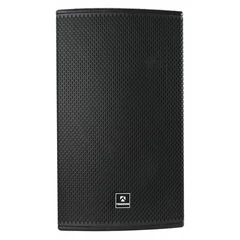
For an INTELLIGENT OPERATION CENTRE to function effectively, it requires a robust communication infrastructure that supports voice, data, video, and images across multiple media types . Modern IOCs integrate private networks, public networks, and emergency communications into a unified management framework.
Advanced platforms support everything from analog telephones and IP phones to video conferencing terminals, surveillance cameras, GIS positioning devices, and broadband terminals . This "fusion dispatch" capability allows operators to seamlessly coordinate any endpoint's voice, data, and video resources, pulling information from third-party systems as needed.
Some cutting-edge IOCs now incorporate AI-powered voice interaction-speech recognition, synthesis, and natural language understanding-allowing operators to command systems "hands-free" through voice alone . This represents a fundamental shift in human-machine interaction within the command center environment.
Building for Security and Sustainability
As IOCs connect an ever-expanding array of devices and systems, cybersecurity becomes paramount. Gartner research indicates that over 60% of industrial enterprises globally experienced at least one cyberattack targeting operational systems in 2023. Modern IOCs must implement "end-edge-cloud" integrated security frameworks encompassing identity authentication, access control, data encryption, and behavioral auditing.
Sustainability is equally critical. Edge data centers supporting IOCs increasingly use renewable energy and high-efficiency hardware to minimize carbon footprints. Advanced liquid cooling systems can achieve Power Usage Effectiveness (PUE) ratios as low as 1.05, compared to 1.4 for air-cooled facilities.
Conclusion: The Strategic Imperative
The INTELLIGENT OPERATION CENTRE represents a fundamental shift in how organizations manage complex operations. According to the China Academy of Information and Communications Technology, 83% of enterprises that have deployed IOCs report significant operational efficiency improvements, with average fault response times reduced by over 40% .
Building an effective IOC is not a one-time project but a systematic journey. Organizations should progress through four core phases: data integration, real-time visualization, AI-powered analytics, and cross-departmental collaboration . Throughout this journey, success depends on maintaining a "business-driven, technology-supported, continuous iteration" mindset-avoiding the common trap of prioritizing construction over operations.
As 5G, edge computing, and large language models continue to mature, the INTELLIGENT OPERATION CENTRE will evolve toward greater autonomy and intelligence, becoming the core engine driving enterprise digital transformation and high-quality development in the years ahead.
Keywords: INTELLIGENT OPERATION CENTRE, Intelligent Operations Center, IOC, Command and Control, AI-Powered Analytics, Digital Twin, Real-Time Monitoring, Fusion Communication, Agentic AI, Smart City Operations