








Beyond the Wall: Building the Future-Ready COMMAND CENTER with Intelligent AV Solutions

In an era defined by information overload and the need for instant decision-making, the COMMAND CENTER (also known as an operations center or situational awareness hub) has emerged as the nucleus of any enterprise, government, or utility operation. Whether it's managing a smart city, coordinating emergency response, or overseeing energy infrastructure, the effectiveness of a COMMAND CENTER hinges on its ability to process complex data and present it with absolute clarity.
Gone are the days when a COMMAND CENTER was merely a room filled with screens. Today, it is a living ecosystem of technology where audio, video, and data converge. For organizations looking to build or upgrade these critical environments, understanding the shift toward IP-based, intelligent, and interoperable systems is the first step toward true operational superiority.

The Evolution: From Monitoring to Predictive Intelligence
Traditional COMMAND CENTER setups often operated in silos, with CCTV, radio, and video conference systems functioning independently. Modern threats and operational complexities require a converged approach. As noted in industry analyses, the goal has shifted from simply monitoring incidents to predicting and assessing them in real-time.
This transformation is driven by several key technological pillars:
1. The Rise of the Intelligent Visual Experience
At the heart of every COMMAND CENTER lies the video wall-the primary tool for shared situational awareness. However, the era of simply displaying content is over. Today's solutions demand 8K distributed architectures that can handle vast amounts of data without latency.
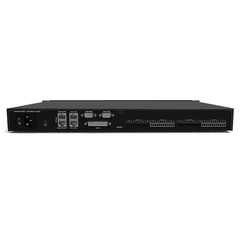
Advanced distributed systems now allow operators to move away from traditional matrix switches. By employing a distributed, network-based architecture, command centers can achieve "all-source visualization." This means pulling data from surveillance cameras, GIS maps, social media feeds, and SCADA systems onto a single unified canvas with point-to-point 8K display and seamless screen roaming. This ensures that when a decision-maker looks at the wall, they see the complete narrative of an incident, not just fragmented data points.

2. AI-Driven Audio and Camera Automation
Visuals dominate the conversation, but audio is the backbone of communication. In a high-stress COMMAND CENTER environment, operators cannot afford to fiddle with PTZ cameras during a crisis.
Modern deployments are leveraging AI-driven camera tracking. Unlike traditional voice-activated systems that can be triggered by the wrong noise, advanced computer vision-such as Seervision technology-recognizes human posture and movement. This allows for seamless presenter tracking during briefings or emergency meetings, ensuring that the focus remains on the speaker, whether they are at a podium or moving across the room -6.
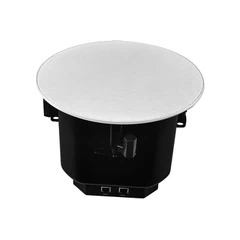
Furthermore, beamforming microphone arrays are replacing desktop microphones. Installed in ceilings, these arrays can dynamically focus on active speakers, filtering out ambient noise and enabling natural communication between the COMMAND CENTER floor and remote field units .
3. Interoperability: Breaking Down Silos with IP and Standards
A COMMAND CENTER is only as strong as its ability to communicate with the outside world. The future lies in total interoperability. Historically, proprietary protocols locked organizations into specific vendors, making upgrades costly and collaboration difficult.
The industry is now embracing open standards like IPMX (Internet Protocol Media Experience) to ensure that audio, video, and control signals can travel over standard networks without costly conversion hardware. By adopting IP-based infrastructures, command centers can now integrate virtually anything-from legacy CCTV feeds to modern drone video streams and Microsoft Teams conference calls-into the same operational picture.
This convergence also extends to the KVM (Keyboard, Video, Mouse) matrix. Distributed KVM solutions allow operators to control multiple servers and workstations from a single seat, with mouse "sliding" seamlessly across different security domains, drastically improving response times during incident management .

4. Resilience and the "No-Downtime" Mandate
Mission-critical environments demand absolute reliability. A failure in a corporate boardroom is an inconvenience; a failure in a COMMAND CENTER during a city-wide emergency is a disaster. Modern system designs are moving toward "decentralized" or "serverless" architectures.
By removing a central server as a single point of failure, distributed systems ensure that if one node fails, the rest of the system continues to operate. Technologies like redundant fiber loops and dual-link backups guarantee that the video wall stays lit and communication lines stay open, 24/7 .
Designing for the Human Element
While technology is critical, the human operator remains the most valuable asset in any COMMAND CENTER. Therefore, the workspace must be designed to reduce cognitive load. This involves implementing "trigger zones" -pre-programmed responses where an operator"s movement or a specific event automatically brings relevant camera feeds and data to the primary screen.
Ergonomics also play a role. With the shift to smaller pixel pitch (like COB LED technology) that reduces eye strain and offers better thermal management, the physical environment supports longer, more effective duty cycles.
The Road Ahead: Cloud and Cyber Resilience
As command centers become more connected, they also become more vulnerable. The future of COMMAND CENTER design must include cyber resilience. This means building systems that are not only physically secure but also have built-in encryption for all video and data streams, preventing interception as information travels across IP networks.
Moreover, the integration of cloud-based processing allows for "follow-the-sun" models, where a COMMAND CENTER in one time zone can seamlessly hand off operations to another, ensuring global operational continuity.

Conclusion
Building a future-ready COMMAND CENTER is no longer just about purchasing the latest screens. It requires a holistic strategy that converges distributed AV processing, AI-driven automation, and open network standards.
As a leading provider of audio-visual solutions, we understand the complexities of these environments. From the command center floor to the boardroom, our mission is to deliver systems that are not only visually stunning but relentlessly reliable and intelligently responsive. When every second counts, your technology should never be the bottleneck.


