




As remote work becomes the norm and global collaboration grows increasingly intensive, enterprise meeting models are undergoing a profound transformation. The boundary between fixed meeting rooms and distributed remote participants is fading, giving way to a new collaboration paradigm-the HYBRID MEETING. This meeting format seamlessly connects on-site attendees with remote participants, ensuring that everyone, regardless of location, can equally engage, listen, and contribute.
For the audio-visual and information technology industry, building a truly effective HYBRID MEETING environment is no longer simply about combining cameras and microphones. It is a comprehensive systems engineering effort that encompasses space design, audio-visual integration, network architecture, and user experience.

What Is a HYBRID MEETING?
A HYBRID MEETING is a meeting format where some participants attend in person while others join remotely. Unlike traditional video conferencing, the core challenge of hybrid meetings lies in ensuring that remote participants experience a sense of immersion and engagement nearly equivalent to that of on-site attendees-and vice versa.
This requires an audio-visual system that not only captures and transmits sound and images clearly, but also possesses intelligent perception and presentation capabilities-the ability to identify who is speaking, automatically switch to close-up shots, eliminate echo and noise, and ensure remote participants can clearly see facial expressions, body language, and presentation content in the room.

Core Challenges of Hybrid Meetings
When deploying HYBRID MEETING solutions, enterprises often face three major challenges:
1. Uneven Audio Experience
Remote participants frequently complain that they cannot hear on-site discussions clearly, or that there is a delay between on-site sound and microphone pickup. Conversely, on-site participants may be distracted by echo or background noise from the remote end. Audio is the most critical element of the hybrid meeting experience-if attendees cannot hear clearly, collaboration breaks down.
2. Single-Dimensional Video
Traditional meeting rooms typically install only one fixed camera at the front. Remote participants see only a wide-angle view, making it difficult to identify who is speaking or to capture details on whiteboards or screens. This "one-way viewing" experience leaves remote participants feeling perpetually disconnected from the discussion.
3. Fragmented Content Sharing
Sharing presentations, videos, data dashboards, and other content often requires complex switching operations. On-site and remote participants may see different content at different times, leading to inefficient communication.

How Audio-Visual Integration Empowers HYBRID MEETINGS
To address these challenges, modern audio-visual integration solutions redefine the standard for HYBRID MEETING experiences across multiple dimensions.
1. Intelligent Audio: Making Every Voice Heard Clearly
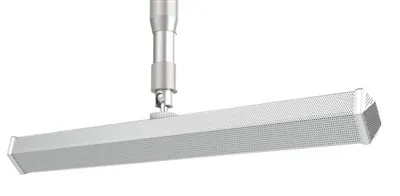
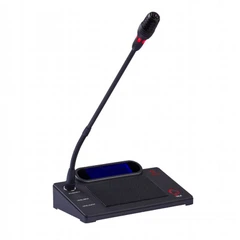
High-performance hybrid meeting systems utilize beamforming microphone arrays and AI-powered noise cancellation to automatically track speaker positions and capture audio precisely while filtering out environmental noise such as air conditioning and projector fans. Through AEC (Acoustic Echo Cancellation) and ANC (Active Noise Control) technologies, these systems ensure no echo interference between on-site and remote participants, delivering a smooth, two-way conversation experience.
2. Intelligent Video: Making Remote Participants Feel Present
Multi-camera layouts combined with AI auto-framing technology can dynamically adjust the view based on activity in the meeting room-smoothly zooming in on a speaker when someone talks, and automatically switching to a wide-angle view during multi-person discussions. Some advanced solutions even support speaker tracking, allowing remote participants to always focus on the current speaker as if they were physically present in the room.
3. Unified Content Collaboration: Enabling Seamless Information Flow
Modern hybrid meeting solutions deeply integrate video conferencing with content sharing. Whether sharing laptop screens, whiteboard content, or physical objects, users can instantly share with all on-site and remote screens with a single click. The combination of interactive touch displays and wireless presentation technology allows both on-site and remote participants to annotate simultaneously and co-edit in real time, achieving true collaborative creation.
4. Simplified Operation: Making Technology Invisible
For most enterprise users, complex equipment operation is itself a barrier to collaboration. An excellent HYBRID MEETING solution pursues a minimalist "one-click join" experience. By using a centralized control system to manage lighting, curtains, projectors, microphones, cameras, and other devices, users can quickly start meetings through a single touch panel or calendar system integration-letting technology serve the meeting rather than disrupt it.

Hybrid Meeting Applications Across Different Scenarios
The value of audio-visual integration lies in its ability to adapt to different scenarios. Deployment strategies for HYBRID MEETING vary depending on space type:
Small to Medium Meeting Rooms: Typically use all-in-one audio-visual endpoints that integrate cameras, microphones, speakers, and codecs into a single unit. Easy to install, these are ideal for daily team collaboration with 4-8 participants.
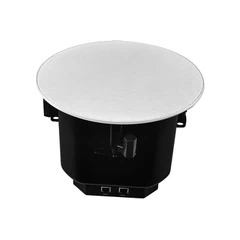
Large Meeting Rooms / Auditoriums: Require multi-camera layouts, distributed microphone systems, and professional-grade sound reinforcement to support hybrid scenarios with dozens of on-site attendees and hundreds of remote participants.
Boardrooms / Executive Meeting Rooms: Beyond basic audio-visual functionality, these spaces emphasize aesthetics, touch-based interaction, and highly customized integration to reflect corporate image while delivering an exceptional experience.
Training Rooms / Multi-Purpose Halls: Need to support flexible spatial configurations-such as movable furniture, adjustable lighting, and multi-screen integration-to accommodate different formats including training sessions, workshops, and launch events.

Technology Trends in Hybrid Meetings
With the rapid advancement of AI and cloud technologies, HYBRID MEETING is undergoing a new wave of technological evolution:
AI Meeting Summaries: Automatically recognize spoken content during meetings, generate real-time transcripts and summaries, and intelligently flag action items-significantly improving post-meeting efficiency.
Immersive Virtual Backgrounds: Using green screens or real-time AI keying technology, remote participants can appear as if they are physically present in the meeting space, enhancing the sense of immersion.
Spatial Intelligence: Leverage sensors and IoT technologies to enable intelligent space management, including meeting room booking, automatic equipment wake-up, and energy consumption monitoring.
Cloud-Native Architecture: Support seamless access across regions and organizations without complex network configurations, ensuring deep compatibility with mainstream video conferencing platforms.
Conclusion
As hybrid work becomes the new normal, HYBRID MEETING has shifted from being a "nice-to-have" to an "essential." For enterprises, investing in high-quality audio-visual integration for hybrid meetings is not merely a means to improve internal collaboration efficiency-it is a strategic investment in employee experience, client relationships, and overall organizational competitiveness.
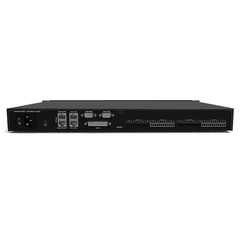
The value of the audio-visual and information technology industry lies in organically integrating these complex technical components-microphones, cameras, speakers, codecs, control systems-so that they operate invisibly during every meeting, allowing participants to focus on communication itself rather than on the technology. When technology steps back, true collaboration can take center stage.
Keywords: HYBRID MEETING, Hybrid Meeting, Audio-Visual Integration, Smart Meeting Room, Video Conferencing, Remote Collaboration, AI Noise Cancellation, Speaker Tracking, Wireless Presentation, Spatial Intelligence