







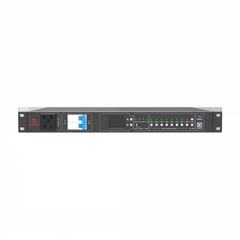
The transmission mode of audio processors mainly includes balanced transmission and unbalanced transmission
Definition and difference between balanced and unbalanced transmissions
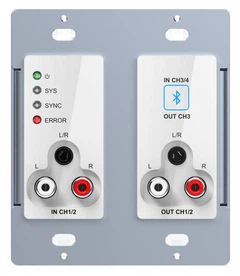
Balanced Transmission: Differential signal transmission is used, typically using a three-prong connector that includes a ground, a cold (negative), and a hot (positive). The values of the interference signals received on the two terminals of balanced transmission are about the same, but the polarity is opposite, so the interference signals can cancel each other out on the load, and have a good anti-interference ability.
Unbalanced transmission: A signal transmission line has only one signal terminal and a ground wire. The anti-interference ability of unbalanced transmission is poor and it is susceptible to external electromagnetic interference.
The application and effects of audio processors in transmission
Balanced transmission: It is suitable for long-distance transmission and high electromagnetic interference environment, which can effectively reduce interference and ensure the stable transmission of signals. For example, balanced transmission is often used in broadcast systems to ensure audio quality.
Unbalanced Transmission: The .5mm plug for short-distance transmission or low-interference environments, such as computers and headphones, is a typical unbalanced interface. Unbalanced transmission devices are simple and less costly, but require better shielding and grounding to reduce interference.
Other functions and application scenarios of the audio processor
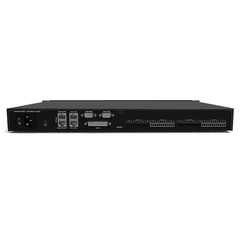
Simple speaker processor: such as DA series inlet 4 out, in 6 out, etc., with parametric equalization, crossover, delay, mixing and other fixed processing modules, used to connect the mixer to the power amplifier, instead of analog peripherals.
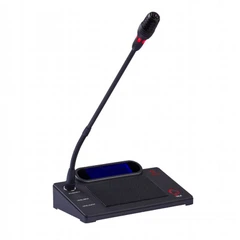
Multi-function digital audio processor: with 8 input and 8 output or larger, the input channel with phantom power, can be connected directly to the conference gooseneck microphone. The internal functions are complete, and the processing module can be dragged and dropped, which can be programmed and controlled online in real time through the network interface.
By understanding these transmission methods and the functions of the audio processor, you can better select the appropriate application scenarios and device configurations to ensure the stable and high-quality transmission of audio signals.


